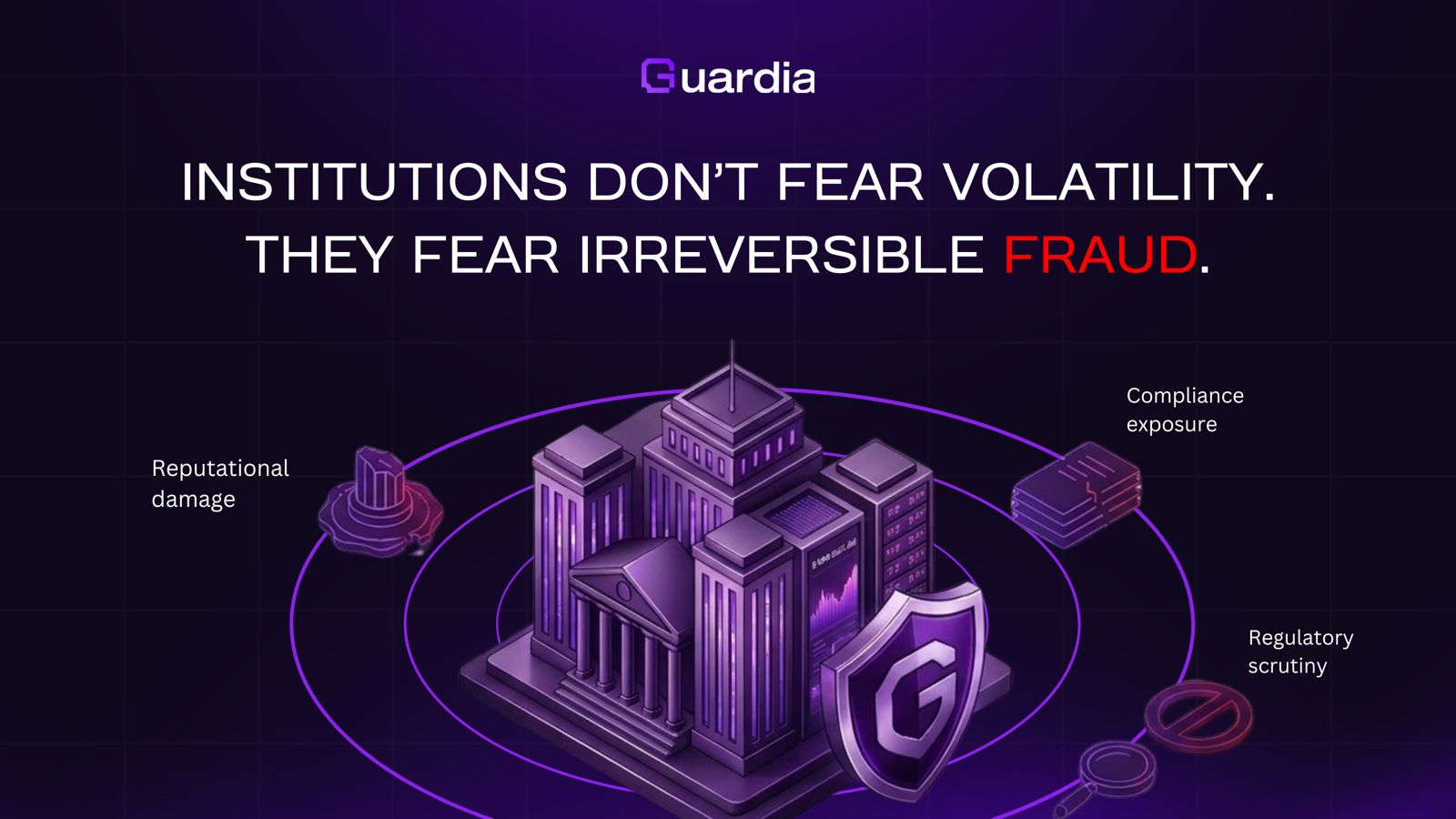
Institutions Don’t Fear Volatility. They Fear Irreversible Fraud.
Introduction
Retail traders fear price drops. That 40% drawdown, the panic sell, the position that goes to zero, these are the risks that dominate crypto Twitter and financial media coverage. But when institutional capital evaluates the crypto market, the conversation is entirely different.
Institutions don't fear volatility. They've managed volatile assets for decades commodities, emerging market currencies, early-stage equity. Volatility can be modeled, hedged, and built into risk frameworks. What cannot be modeled, hedged, or recovered from is irreversible fraud.
And in crypto, fraud is irreversible by design.
The Fundamental Difference Between Volatility and Fraud
Volatility is a market condition. It moves assets up and down, but the assets remain. A treasury team that takes a 30% drawdown on a crypto position still has 70% of that capital. They can hold, rebalance, or exit on their own terms. The situation is painful, but it's manageable.
Fraudulent transactions are categorically different. When a wallet gets drained through a malicious approval, when a phishing attack extracts private keys, when a clipboard hijack redirects a large transfer to an attacker's address there is no 70% remaining. There is zero. And there is no mechanism in the base layer of any blockchain that allows that transaction to be reversed.
Traditional finance has fraud detection systems, chargeback mechanisms, regulatory recourse, and insurance frameworks precisely because centralized systems can intervene. Crypto was designed to eliminate those intermediaries. That's also what eliminates the safety net.
What Institutional Risk Teams Actually Evaluate
When an institution's risk committee or compliance team evaluates a crypto engagement, whether that's custody of digital assets, DeFi treasury management, on-chain settlement infrastructure, or employee wallet management, they're running a very specific analysis. It goes well beyond price risk.
Reputational Damage: A single high-profile exploit doesn't just represent a financial loss. It represents a public failure of due diligence. For a fund, a fintech, or any regulated entity, being the organization that lost client assets to a wallet drain or phishing attack is a reputational event that can take years to recover from if recovery is even possible.
Regulatory Scrutiny: Security failures in crypto increasingly attract regulatory attention. Regulators across the UAE (CBUAE, TDRA), Europe (under MiCA), and the US are developing clearer expectations around custodial security, incident reporting, and compliance frameworks. An institution that suffers a preventable security breach may face investigations, forced disclosures, and heightened oversight that persists long after the incident itself.
Operational Risk: Internal teams at institutions interact with crypto infrastructure as part of their daily workflow treasury managers approving transfers, developers testing smart contract interactions, finance teams managing stablecoin positions. Every one of those interactions is a potential attack surface. Without device-level protection, the internal attack surface scales with headcount.
Custody Vulnerabilities: Even institutions using hardware wallets and multi-sig setups can be exposed at the device layer, through malware that monitors keystrokes during seed phrase entry, clipboard hijacking that redirects transfers even after they're approved internally, or phishing attacks that compromise the credentials of individuals with signing authority.
The Missing Layer in Institutional Crypto Security
Traditional finance has built decades of security infrastructure. Fraud monitoring systems flag anomalous transactions in real time. Reversal mechanisms exist for unauthorized transfers. Multi-layer verification requirements slow down suspicious activity enough for human intervention. Insurance frameworks cover certain categories of loss.
Crypto has none of these built in at the protocol level. By design, transactions are final, fast, and pseudonymous. The security burden is pushed entirely to the user, or in the institutional context, to the organization.
Most institutional crypto security stacks focus on the custody layer: hardware wallets, multi-sig protocols, air-gapped signing environments. These are meaningful controls. But they don't address the device-layer threats that operate above the custody layer, the malware running on the machine used to initiate transfers, the phishing site that captures login credentials before the hardware wallet is even involved, the clipboard hijack that swaps the destination address after multi-sig approval has already been granted.
The gap between custody security and device security is where institutional crypto losses happen.
Prevention Is the Only Recovery Strategy
In traditional finance, 'recover from fraud' is a meaningful category of response. In crypto, it isn't. The only meaningful strategy is prevention, stopping the malicious interaction before it reaches the point of execution.
Guardia is built around this principle. Rather than detecting fraud after it occurs and attempting notification or logging, Guardia operates at the device level to block malicious interactions before they ever reach the signing stage:
• Blocking malicious transaction requests before they're presented to the user or hardware wallet
• Detecting suspicious smart contract behavior and flagging abnormal approval requests
• Preventing interaction with known and newly-identified phishing domains
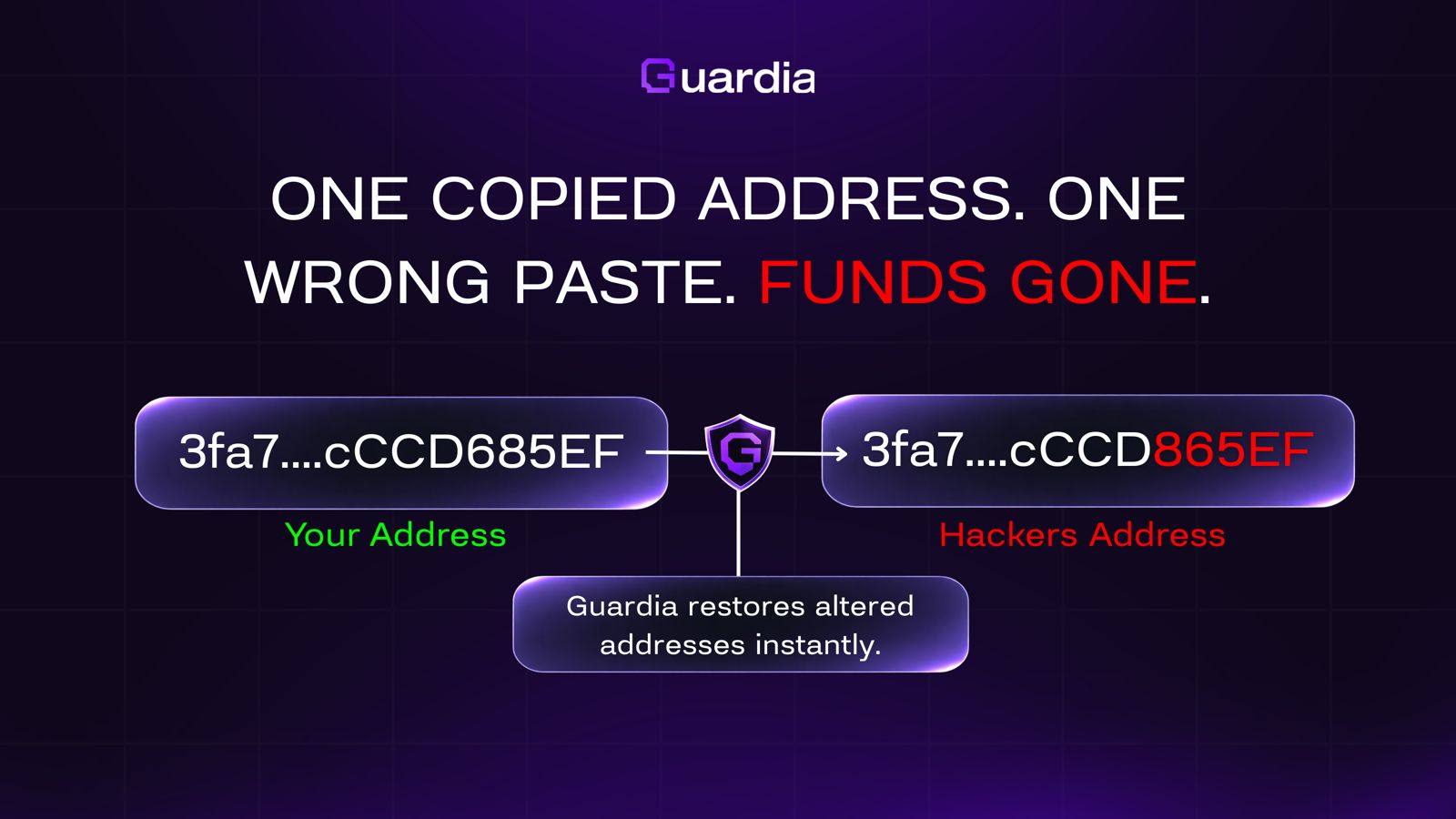
• Monitoring clipboard activity to prevent address substitution on high-value transfers
Conclusion
The institutions that will define the next decade of crypto adoption aren't waiting for the market to become less volatile. They're waiting for the infrastructure to become secure enough that the operational risk of engagement is manageable within their existing frameworks.
The answer to institutional adoption isn't a better price forecast. It's a security layer that matches the standards they hold everything else to continuous, device-level, prevention-first.
Volatility they can manage. Irreversible fraud they cannot. That's the problem Guardia was built to solve.
Read other blogs
Stay informed with our latest articles on property protection, security trends, and best practices.